Overview
This video demonstrates the three-month outcome of a Paul Glaucoma Implant inserted after removing a 360-degree scleral buckle. The removal created adequate orbital space for implantation, supported by a fascia lata patch graft over a conjunctival buttonhole. The result highlights how careful reconstruction and implant positioning can yield excellent pressure control and surface healing in complex, previously operated eyes.
Video on YouTube
This video demonstrates a Paul Glaucoma Implant after removal of a 360-degree scleral buckle 3 months following the proceedure.


If age-restricted, please watch this video directly on YouTube.
Key points
- Removal of the 360-degree scleral buckle created sufficient orbital space for the Paul Glaucoma Implant.
- A fascia lata patch graft provided separation between the implant plate and conjunctival buttonhole.
- At three months, intraocular pressure was stable at 14 mmHg without medication.
- The ocular surface and implant coverage were well healed, with improvement in visual acuity to 6/15.
- This case demonstrates effective outcomes in complex eyes following previous retinal surgery.
Transcript
Paul Glaucoma Implant After Scleral Buckle Removal
This video presents an update on a case shown previously. In that earlier procedure, there was no space in the orbit for the Paul Glaucoma Implant because of the presence of a large scleral buckle that had to be removed. [0:20]
After removal of the buckle, there was sufficient orbital space to accommodate the Paul Glaucoma Implant.
Read more
This three-month update follows a challenging case in which a Paul Glaucoma Implant was placed after removing a 360-degree scleral buckle. Once the buckle was removed, sufficient orbital space was available, and a fascia lata patch graft provided additional protection over a conjunctival defect. Postoperatively, the patient achieved excellent pressure control and visual recovery, showing that effective outcomes are possible even in complex surgical scenarios.
Surgical Details
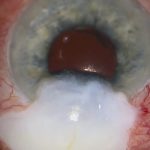
An extra fascia lata patch graft was used to separate the Paul Glaucoma Implant plate from a large conjunctival buttonhole. [0:40]
Three-Month Postoperative Results
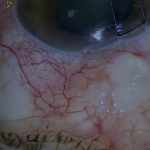
Three months later, the intraocular pressure was 14 mmHg without medication. The tube and plate were well covered, and the ocular surface was well healed. The best-corrected visual acuity was 6/15 — one line better than before surgery — which was a pleasant and consistent finding.
Clinical Significance
This case demonstrates that good results can be achieved in complex eyes where previous scleral buckling had compromised the available space for implantation. [1:18]
For outcome benchmarking, see the International Glaucoma Surgery Registry.